Customer story · Retail Media Networks
Retail Media Networks: from meeting notes nobody read to decisions by email and tasks in Jira
Their video calls already gave them notes. Nobody read them. Now the customer gets the decisions by email, and the tasks go straight from Jurnie to Jira once someone approves them.
Who they are
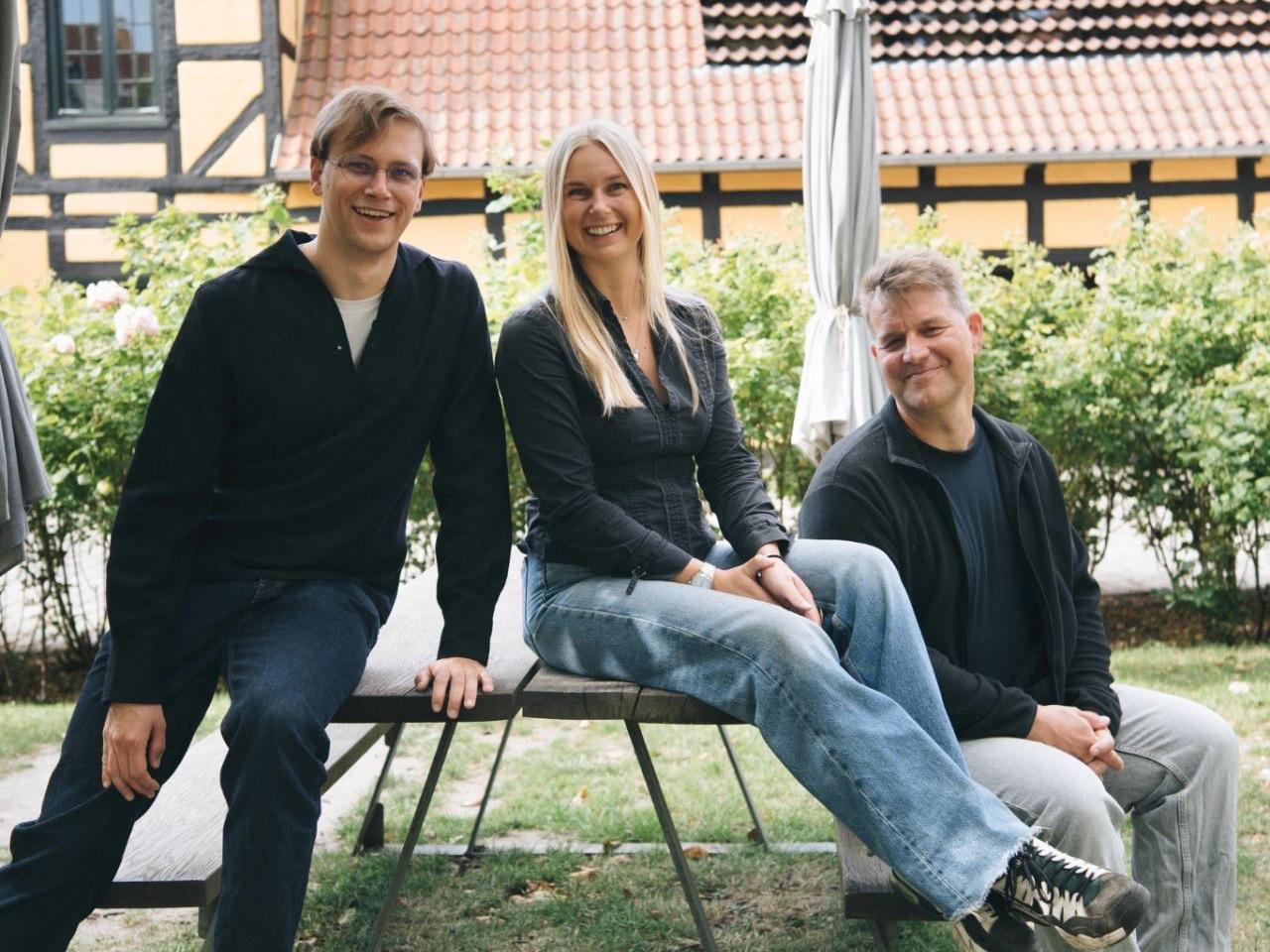
A Copenhagen company that helps retailers sell advertising on their own channels, with advice and the software to run it. Anna Serner, co-founder and CCO, runs the customer meetings, mostly in Swedish and Danish. Uffe Henrichsen, co-founder and CEO, runs the product.
Since they started with Jurnie in April, Anna no longer writes up her meetings herself. She keeps her attention on the customer, and Jurnie turns the conversation into what comes next: the decisions for the customer and the tasks for the team.
Notes aren't the problem
Their video calls already send a transcript and a list of actions after every meeting. It lands in the inbox, and it is long. The notes were never what was missing. What was missing was turning them into the two things that matter after a meeting: the email the customer reads, and the tasks the team works on.
“Nobody ever looks at it. So, great job, but nobody cares.”
The customer gets the decisions, not a transcript
Anna no longer writes the follow-up email herself. When a customer meeting ends, she asks Jurnie for the decisions and next steps, and they go straight into her email. The customer gets a few lines they actually read instead of pages of notes, and there is a written record of what was agreed.
Jurnie captures the meeting wherever it happens: on her laptop for video calls and on her phone in the room, with no bot joining. It follows the conversation in Swedish, Danish or English, even when a meeting switches between them. More than 200 meetings since April.
“You'd rather have a short email that someone actually reads. And when there are decisions, I really like sending them over email.”
The tasks land in Jira, after a person says yes
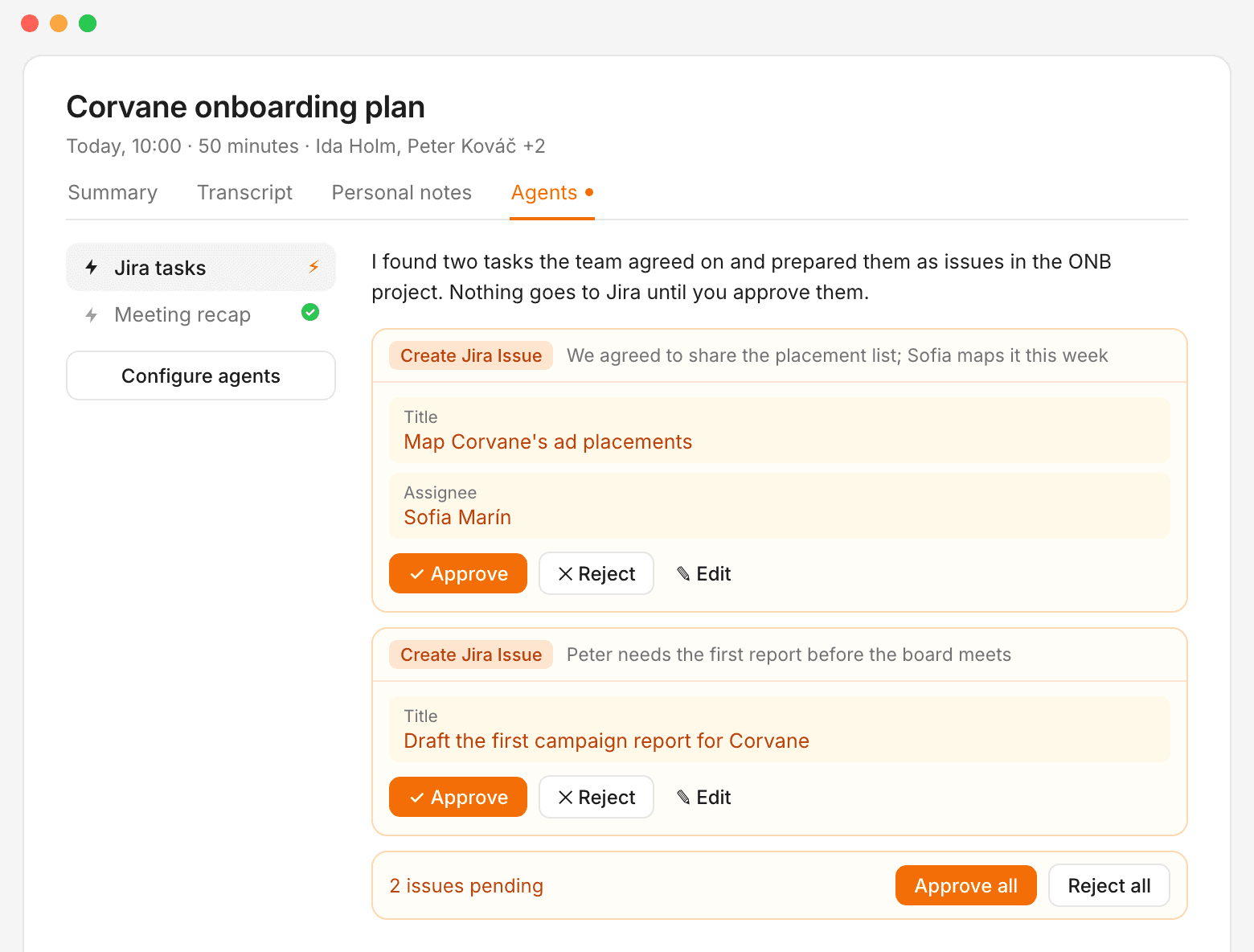
After a customer onboarding, someone used to go through the meeting and type the agreed tasks into Jira by hand. Now a Jurnie agent reads the meeting and proposes the Jira issues itself. Each one waits in Jurnie with Approve, Reject and Edit, and nothing reaches Jira until Anna or Uffe says yes.
The first time, they ran it on an onboarding meeting Anna had already done by hand: she had typed five tasks, the agent proposed eight, and hers were in the list. Uffe’s verdict: it would have saved them the time they spent typing those tasks in.
“It's very relevant. It's all the stuff we added manually. That's super cool.”
It runs on its own when the meeting ends
There is nothing to build. Jurnie comes with ready-made agents, among them one that turns the work a meeting agreed into Jira issues. Connect Jira, switch it on, and it runs by itself when the meeting ends: no prompt to write, no other AI tool to wire up.
Going straight from Jurnie to Jira also means the meeting does not pass through another AI provider on the way. Jurnie processes meetings in Europe, and for Anna that was the point: the fewer places a customer conversation goes, the better.
“So if we want to have that security layer, it's better that it goes from Jurnie directly to Jira.”
“Most of my meetings are in Swedish or Danish, and Jurnie handles both, on my computer and in the meeting room. When the meeting ends, the write-up is already there, and I just send the customer the decisions.”